
Can You Fit Flooring Over Underfloor Heating?
Carpet, laminate and vinyl can all go over underfloor heating, as long as the whole floor build-up stays below about 2.5 tog and the system is warmed up and down gradually.
Yes, with the right product underneath as well as on top. The limiting factor is thermal resistance, measured in tog: the complete build-up of underlay and floor covering together should stay at or below around 2.5 tog, or the heat struggles to get through and you pay to warm the floor rather than the room.
That single figure rules out more floors than anything else, and it is the part most people do not think to ask about.
What Tog Means Here
Tog measures how well a material resists the passage of heat. For a duvet a high tog is the whole point. For a floor sitting over a heating system it is the opposite: every extra tog is a layer of insulation between the pipes and your feet.
The figure that matters is the total, not the carpet alone. A 1.2 tog carpet over a 1.8 tog underlay is a 3.0 tog floor, which is already past the sensible limit even though neither part looked like a problem on its own.
Carpet Over Underfloor Heating
Carpet works well over underfloor heating provided both the carpet and the underlay are chosen for it. The underlay is usually the problem, because the thick, soft underlays that feel best underfoot are exactly the ones that insulate most.
Underlays made specifically for underfloor heating are widely available and carry a stated tog figure, so the sum can be done before anything is ordered rather than discovered afterwards.
Laminate Over Underfloor Heating
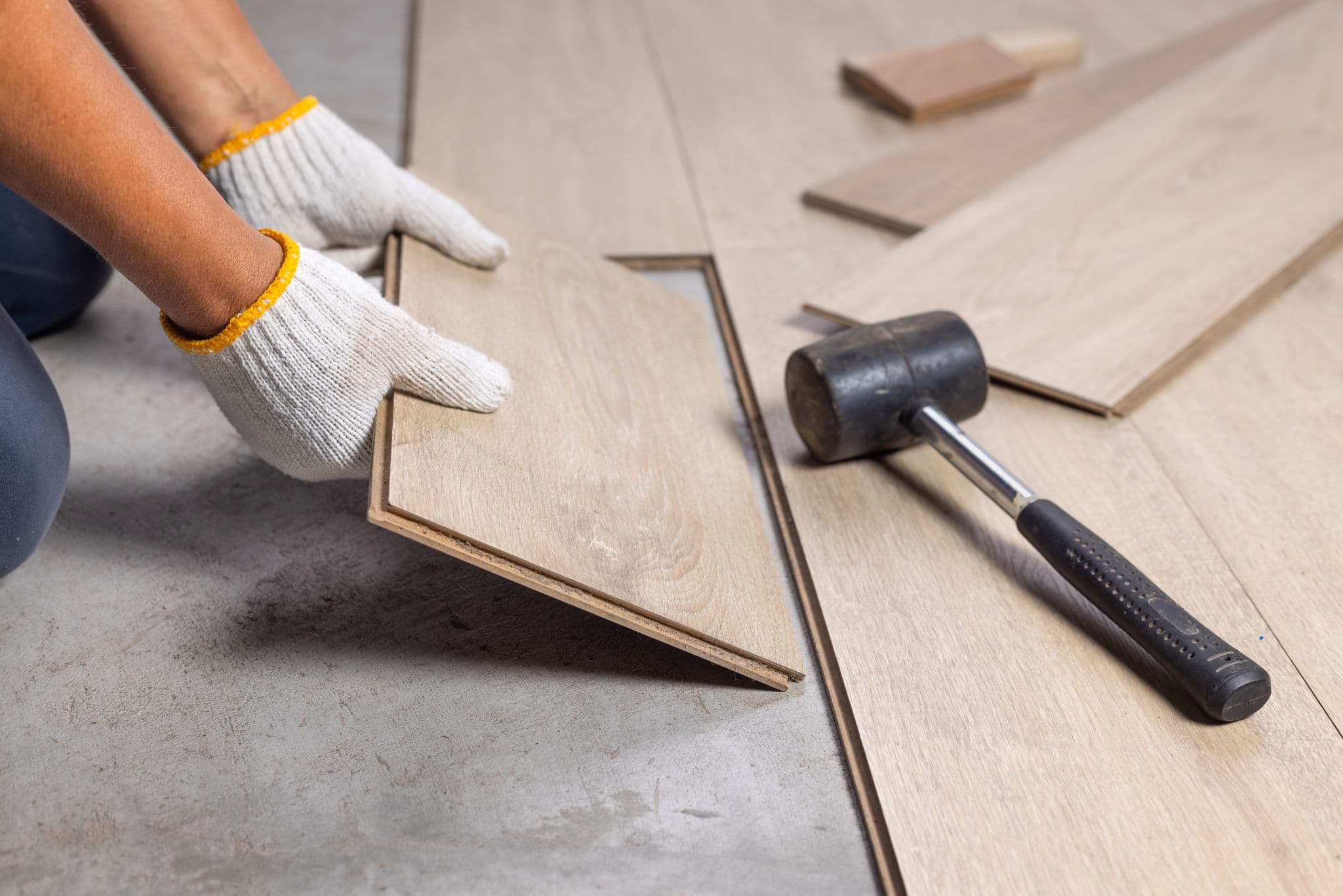
Laminate is generally a good match. It is thin, it conducts heat reasonably well, and because it is a floating floor it is not bonded to the slab, so it can move slightly as it warms and cools.
What it needs is an expansion gap at every edge. A heated board expands further than an unheated one, and a floor with no room to move will lift at the joins or push against the skirting.
Vinyl Over Underfloor Heating
Vinyl is thin and conducts heat well, which makes it one of the better coverings for a heated floor. The constraint is temperature rather than tog: most vinyl has a maximum surface temperature, commonly in the region of 27 degrees, above which it can discolour or soften.
Any system should be set so that the surface stays below the figure the manufacturer gives for that specific product.
Warming It Up and Cooling It Down
A new floor over underfloor heating should not be put straight onto full heat. The usual approach is to leave the heating off for a period after fitting, then bring it up gradually over several days, and to bring it back down the same way at the end of the season.
Sudden changes are what cause gaps between boards and curling at the edges of vinyl. Gradual ones rarely cause anything at all.